The Remarkable True Story Behind Dolly Parton’s “I Will Always Love You”

For millions of listeners, “I Will Always Love You” is inseparable from Whitney Houston and the soaring performance that became one of the defining songs of The Bodyguard. But the song belonged to Dolly Parton long before Houston turned it into a worldwide phenomenon — and its origins had nothing to do with the end of a romance.
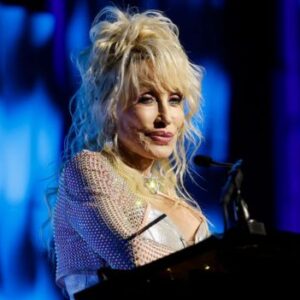
Parton, who died Tuesday at 80, wrote and originally recorded the song after making one of the most difficult professional decisions of her early career: leaving Porter Wagoner, the country star who had helped introduce her to a national audience.
Even more remarkably, Parton said she wrote “I Will Always Love You” in 1973 on the same afternoon she composed another song that would become one of her signatures: “Jolene.”
A goodbye to Porter Wagoner

Parton’s relationship with Wagoner began in 1967, three years after she moved from Locust Ridge, Tennessee, to Nashville.
Wagoner invited the young singer to join The Porter Wagoner Show, his syndicated music and comedy program. The two regularly performed together, and Wagoner became an important figure in Parton’s developing career.
He also helped her secure a deal with his record label, RCA Victor. Together, Parton and Wagoner would release 13 studio albums.
Parton remained on The Porter Wagoner Show for seven years, but eventually became convinced that she needed to establish herself independently.
Speaking to Howard Stern in 2023, she recalled knowing that she could not remain simply “a girl singer” for the rest of her career.
“I knew my destiny,” she said. “I knew that I had to continue doing what I felt … drawn to do.”
Wagoner, however, struggled with her decision to leave.
“There was a lot of grief and heartache there, and he just wasn’t listening to my reasoning for my going,” Parton told Country Music Television in 2011.
Unable to make him understand through conversation, Parton turned to the form of communication she knew best: songwriting.
“I thought, ‘Well, why don’t you do what you do best? Why don’t you just write this song?’”
The result was “I Will Always Love You.”
Dolly sang the song directly to Wagoner

Although generations of listeners would eventually interpret the ballad as the story of a romantic separation, Parton had written it as a deeply personal farewell to her professional partner and friend.
She later recalled taking her guitar into Wagoner’s office and performing the song privately for him.
“I sang the song alone in his office — just me and my guitar,” she told Stern.
The performance changed the conversation.
According to Parton, an emotional Wagoner told her, “That’s the best song you’ve ever wrote … You can go if I can produce the song.”
Their professional partnership was ending, but their friendship survived.
Decades later, when Wagoner died in Nashville in 2007, Parton was at his bedside.
Elvis Presley nearly recorded it
“I Will Always Love You” soon attracted the attention of another music legend: Elvis Presley.
Parton said Presley wanted to record the song, an opportunity she initially found enormously exciting. But the proposed recording came with a condition.
Presley’s manager, Colonel Tom Parker, wanted half of the publishing rights.
Parton refused.
“I cried all night,” she later told CMT, recalling how people around her questioned why she would turn down the chance to have Elvis Presley record one of her songs.
But Parton was unwilling to surrender ownership.
“I always wondered what it would sound like,” she said. “I know he would have killed it.”
Years later, that painful business decision proved extraordinarily valuable.
Whitney Houston almost sang a different song in The Bodyguard
Nearly two decades after Parton first released the song, “I Will Always Love You” was given an entirely new life through Whitney Houston.
Yet Houston’s famous version almost never happened.
For the 1992 film The Bodyguard, Houston was initially expected to perform “What Becomes of the Brokenhearted.”
Music supervisor Maureen Crowe later explained that slowing down that song did not work as intended. There was another complication: Paul Young had recently covered it for Fried Green Tomatoes, and his version was climbing the charts while The Bodyguard was being filmed.
Crowe instead suggested “I Will Always Love You” to the film’s producer and star, Kevin Costner.
He embraced the idea.
Houston’s recording went on to become her signature song, introducing Parton’s composition to an enormous new audience.
The financial impact for its songwriter was equally extraordinary. Forbes reported that Parton earned $10 million in royalties from Houston’s version.
Parton later joked about the contrast with the Elvis Presley deal she had reluctantly rejected years earlier.
“When Whitney’s version came out, I made enough money to buy Graceland,” she said.
A song that became bigger than its original story
By the time “I Will Always Love You” celebrated its 50th anniversary in 2024, the song had traveled far beyond the circumstances that inspired Parton to write it.
What began as a musical goodbye to Porter Wagoner became a country hit, nearly became an Elvis Presley recording and ultimately found another generation through Whitney Houston.
For Parton, however, its enduring power appeared to come from the way listeners had made the song part of their own lives.
“It will always hold a special place in my heart as I hope it does yours,” she wrote on Instagram for its anniversary.
Then she acknowledged something even its songwriter could not have anticipated when she sat down to write it in 1973:
“I never realized it was your song.”