Prince Harry and Meghan Criticise Meta Over £13 Billion Child Safety Settlement
Prince Harry and Meghan Markle have criticised Meta over its agreement to pay up to £13 billion to settle a major US legal battle over the alleged harm caused to children by Facebook and Instagram.
The Duke and Duchess of Sussex accused the technology giant of relying on what they described as a data-extraction business model that has been used on children and other users for years. They also argued that the settlement allowed Meta to avoid another trial and the accountability that could have followed it.
The agreement, announced in the US on August 26, could require Meta to pay up to $17.1 billion over ten years. It resolves claims brought by 47 states, Washington, D.C., Puerto Rico, American Samoa and the Northern Mariana Islands alleging that Meta designed Instagram and Facebook with addictive features, exposed young users to serious mental-health risks and misled the public about the safety of its platforms.
The settlement has been described by US officials as one of the largest state consumer-protection agreements in American history, outside the major tobacco settlements of the 1990s.

Harry and Meghan accuse Meta of avoiding accountability
Harry and Meghan, who have increasingly focused their public campaigning on children’s online safety, welcomed the new protections while taking aim at the financial settlement.
In their statement, they said Meta had chosen to pay rather than face another trial that could have produced an outcome forcing the company to accept greater accountability.
They also argued that Meta could afford the settlement because of the scale of its profits, citing reports that the company could recover the equivalent of the roughly $17 billion payout in profit within 30 days.
The couple said the settlement was nevertheless a significant development for parents and campaigners seeking safer online environments for children.
They said the agreement demonstrated that Meta and other social-media companies were facing sustained pressure from parents, survivors and advocates who would continue pushing for changes to the way young people use online platforms.
The Sussexes added that they stood with parents, young people, legal and policy experts and other campaigners seeking greater accountability and wanted child safety to be incorporated into every online space used by children.

New restrictions for teenage users
As part of the agreement, Meta has committed to a series of changes affecting teenagers on Instagram and Facebook.
The measures include a default block on platform use between midnight and 6am, the muting of notifications during school hours and additional controls for parents.
The company will also hide the number of likes and reactions on posts by default and restrict teenagers from using extreme makeup or beauty filters that have been linked to concerns about mental health.
Meta has further promised stronger measures to prevent children under the required age from creating accounts and additional protections against harmful content.
The settlement also provides teenagers with an optional chronological feed rather than one based on algorithmically recommended interests. Restricting how long young users can remain on the platforms, particularly at night and during school hours, could affect a business model built around keeping users engaged so that they can be shown advertising and generate data.
The new safeguards are subject to the terms of the settlement and apply to participating US states. They will not automatically extend to users in other countries, including the UK.
Meta’s agreement is expected to remain in place for ten years, with the financial payments made to the participating states over that period.

Meta urges TikTok and YouTube to follow suit
Meta has also used the agreement to call on other major social-media companies to introduce comparable restrictions.
The company has specifically challenged TikTok and YouTube to adopt measures including daily usage limits, night-time restrictions and age-assurance systems.
Meta said that around 30 per cent of the settlement, worth about £4 billion, would only be payable if YouTube and TikTok agreed to contribute the same amount and introduced comparable safeguards.
Meta’s chief legal officer, CJ Mahoney, argued that teenage users move between multiple platforms and that meaningful protection therefore requires action across the wider industry.
“As a parent, I’m proud of both the work Meta has done to protect kids historically, and of this new ground-breaking agreement,” he said.
He added that the measures would only succeed if other social-media platforms followed Meta’s lead.
The strategy has also attracted attention because the settlement could place pressure on rival companies facing similar scrutiny over the effects of their platforms on young users. Other major technology firms, including Snap, YouTube and TikTok, are already facing related claims.

The legal case that led to the settlement
The agreement brings an early end to a trial that began the previous week in California.
Meta had been facing allegations brought by a coalition of US states that argued the company deliberately designed its services to attract and retain young users while failing to adequately address the potential consequences.
The original litigation involved 29 states, while the eventual settlement covers claims involving 47 states, Washington, D.C., Puerto Rico, American Samoa and the Northern Mariana Islands.
Chief executive Mark Zuckerberg had been expected to give evidence before a federal jury as the trial progressed.
Instead, the settlement was reached before that testimony could take place. The agreement was approved by US District Judge Yvonne Gonzalez Rogers, according to court documents.
Meta has not admitted wrongdoing as part of the settlement. The company had faced potentially much larger financial exposure had the litigation continued, while separate cases involving other states and social-media companies remain in play.
Political pressure in Britain
The settlement has also prompted criticism from British politicians.
The Conservatives said the agreement showed that social-media companies had turned a blind eye to the damage allegedly being done to children.
Shadow education secretary Laura Trott said social-media companies should not have unrestricted access to children until they could demonstrate that their platforms were safe.
She also called on Prime Minister Andy Burnham to proceed with a planned social-media ban for under-16s, which is due to take effect next year, arguing that delays would leave more children exposed.
The Molly Rose Foundation, established in memory of 14-year-old Molly Russell from Harrow, London, who took her own life in 2017 after viewing harmful online content, also welcomed the development.
The organisation said the settlement demonstrated that major technology companies could and should be held accountable.
Harry and Meghan return to Britain with their children
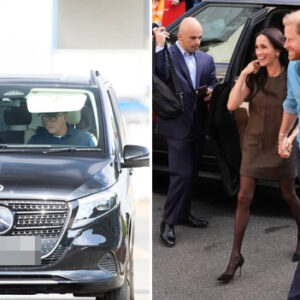
The Sussexes’ statement came just one day after Harry and Meghan returned to Britain with their two children, Prince Archie and Princess Lilibet, following six years living in the United States.
The family arrived at Birmingham Airport around noon on August 26 after travelling from California on a private aircraft. They are understood to have flown from Van Nuys Airport in Los Angeles aboard a Bombardier Global Express XRS long-range business jet.
Their return marks a significant change for the family after Harry and Meghan stepped back from their roles as working members of the Royal Family in 2020 and subsequently established a home in Montecito, California.
The couple, aged 41 and 45 respectively, are expected to live in a non-royal residence outside London while maintaining their homes in California and Portugal.
Archie, seven, and Lilibet, five, have both been enrolled in schools in or around the Cotswolds and are due to begin the new school year next week.
The family’s arrival was reportedly not accompanied by police protection, prompting renewed questions about arrangements for the couple’s security and whether British taxpayers will ultimately bear any related costs.
Harry and Meghan are understood to intend to maintain an international lifestyle rather than completely sever their links with the United States.
Their return to Britain had come as a surprise following their departure from royal duties and move to California. It also follows a visit last month in which Archie and Lilibet met their grandfather, King Charles, at his Highgrove home for the first time in four years.
The rest of the Royal Family is currently spending its summer break at Balmoral.
Meghan remains active on Instagram, where her personal account has 4.8 million followers. Her business account for As Ever has around 900,000 followers.
For Harry and Meghan, the latest intervention puts their long-running focus on children’s online safety back in the spotlight. Their response to Meta’s settlement welcomed the new safeguards but made clear that, in their view, the fight for greater accountability across the technology industry is far from over.