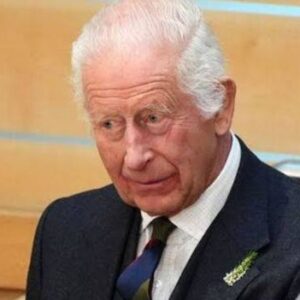
Prince Harry may be back on British soil, but one thing he left behind six years ago is not waiting for him.
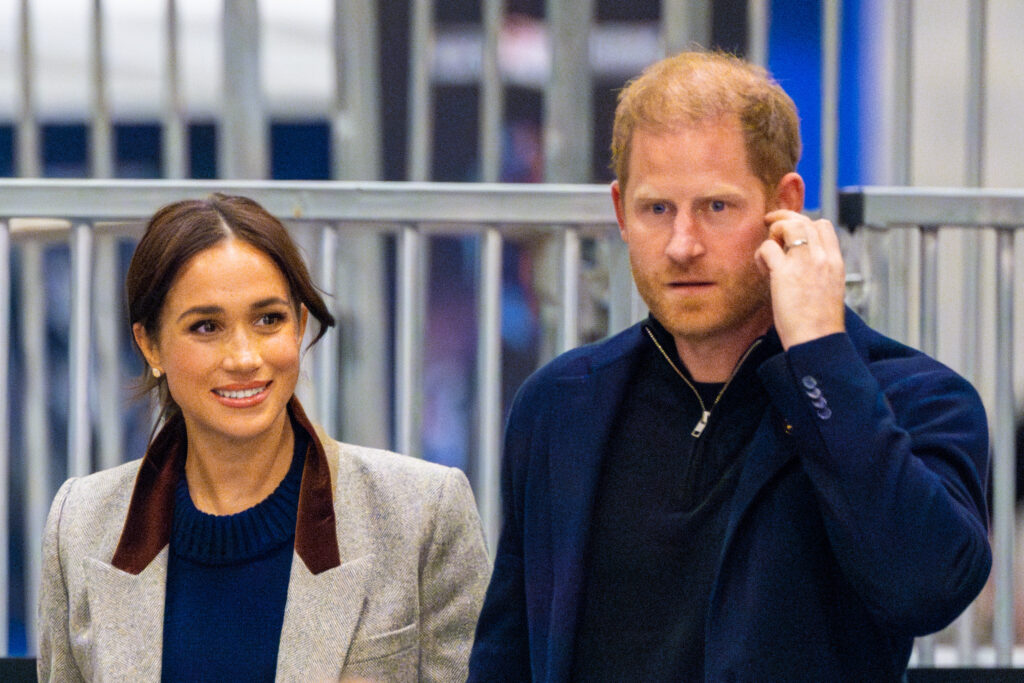
A working royal role.
King Charles has now drawn an unusually clear boundary around Harry and Meghan Markle’s new life in the UK, issuing formal guidance that leaves little scope for the kind of hybrid royal arrangement the Sussexes originally sought before Megxit.
There was no dramatic announcement from the King.
No public confrontation with his son.
Instead, senior figures across government, the military and organizations representing the Crown were quietly given instructions about exactly how the Duke and Duchess should now be regarded.
And one sentence effectively settles the matter:
“There is no change to the current status of the Duke and Duchess of Sussex.”
Harry may have come home.
The old rules have not changed with him.
Harry’s UK return created an obvious question

When Harry and Meghan returned to Britain last month, their move inevitably raised questions about what their new lives would look like.
They are no longer living thousands of miles away from the institution they left in 2020.
Harry will once again be able to attend British charities and public events far more easily.
That creates an unusual situation.
Could the Duke begin helping with selected royal duties while keeping his independent commercial life?
Could he represent the monarchy occasionally in Britain without giving up the freedom he and Meghan established after leaving?
It would resemble the compromise the Sussexes originally hoped to achieve six years ago.
King Charles’ latest intervention suggests there should be no expectation of that happening.
The King ordered formal guidance to be circulated

The letter was prompted by requests for clarification following Harry and Meghan’s relocation.
“Following the decision by the Duke and Duchess of Sussex to relocate to the UK, we have received a number of requests for guidance,” it states.
“To help avoid doubt or confusion, the King has directed that the following information be shared.”
The recipients are significant.
The guidance was intended for senior stakeholders including figures in government, the military and those representing the Royal Family around Britain.
In other words, the people most likely to encounter Harry and Meghan in circumstances where their status could become unclear have now been told precisely where they stand.
They are not representing King Charles

The letter returns directly to the events of January 2020.
“It is well known that in January 2020 the Duke and Duchess stepped down from undertaking representative duties on behalf of the Sovereign, and are no longer working members of the Royal Family.”
Then comes the important confirmation:
“This position will continue to be fully respected.”
Their move back to Britain therefore changes their address, not their constitutional position.
Harry can attend events.
Meghan can pursue projects.
Both can support charities.
But none of those activities should be interpreted as representing King Charles.
The Palace uses an even more striking description
The guidance goes further.
“In short, their position is akin to private citizens with commercial and charitable interests.”
For two people who once occupied prominent positions inside the working monarchy, that is an extraordinary description to see formally reiterated by the Palace.
Harry remains the King’s son.
He remains Duke of Sussex.
Meghan remains Duchess of Sussex.
Their children remain grandchildren of the monarch.
None of that, however, gives the couple an official role.
When Harry walks into a charity event in Britain, he is there as Prince Harry — but not as a representative of the Sovereign.
That difference is now being made unmistakable.
The Sandringham decision has survived another test
The roots of the situation stretch back to January 2020.
Harry and Meghan originally hoped to step away from life as senior working royals while retaining a role supporting Queen Elizabeth II.
At the same time, they wanted greater financial independence and freedom to pursue their own ventures.
The arrangement quickly became known as “half-in, half-out.”
It was not accepted.
The late Queen concluded that representing the monarch could not be combined with the independent commercial model the Sussexes wanted.
Harry and Meghan subsequently left working royal life altogether.
Now, despite their return to Britain, royal officials have made clear that the settlement reached during that period still stands.
Coming home has not reopened negotiations
That is arguably the most important message contained in the new guidance.
Harry’s circumstances are radically different from those of 2020.
He has spent years outside royal life.
He and Meghan have developed independent commercial and charitable interests.
Their children are older.
And the monarch is now Harry’s father rather than his grandmother.
Yet none of those changes has altered the fundamental rule.
There remains a dividing line between being a working representative of the Crown and living independently.
Harry remains on the independent side.
Their HRH styles are staying on the shelf
The guidance also confirms that Harry and Meghan’s formal His Royal Highness and Her Royal Highness styles remain in abeyance and are not used.
Again, their return has not triggered any reversal.
The couple retain their Duke and Duchess of Sussex titles, but the royal styling associated with their former lives remains dormant.
It is another small but symbolically powerful reminder that returning to Britain does not mean returning to the position they held before Megxit.
The distinction may appear technical.
Inside the tightly controlled world of royal protocol, it is anything but.
Why the Palace needed to act before Harry’s public appearances
There is a practical reason for issuing the guidance now.
Harry and Meghan are likely to have their own public and charitable activities in Britain.
Those appearances could easily create confusion.
Imagine Harry attending a major veterans’ event.
Is he there privately?
Is he representing one of his organizations?
Is he representing his father?
For people familiar with the history, the answer may seem obvious.
For local officials, military representatives or organizations hosting him, it may not be.
The Palace has now supplied the answer before that situation arises.
The timing also sends a powerful message

Administrative housekeeping does not have to be politically meaningless.
By restating the Sussexes’ position immediately after their return, the Palace prevents ambiguity from developing in the first place.
There can be no gradual assumption that Harry is quietly moving back toward royal duty.
There can be no appearance that a few charitable engagements represent the beginning of an unofficial royal comeback.
And there can be no misunderstanding among organizations dealing with the couple.
Whatever Harry and Meghan do next, they do it independently.
That could matter enormously for their commercial future
Harry and Meghan’s royal connection is inseparable from their international profile.
It is part of what makes them commercially valuable.
But the Palace guidance draws a firm distinction between possessing royal titles and carrying royal authority.
If the Sussexes pursue new media projects, business ventures or partnerships in Britain, those activities remain entirely separate from the monarchy.
Likewise, their charitable work cannot be presented as official royal service.
The Palace is not necessarily preventing them from building a major new public life in Britain.
It is simply making sure nobody mistakes that life for royal duty.
Charles did not need a public confrontation
Perhaps the most striking element is how little drama was required.
The King did not have to publicly tell Harry “no.”
He did not need another Sandringham summit.
He did not need to discuss his son in an interview.
A carefully drafted piece of guidance accomplished the same objective.
The existing arrangement remains.
Everyone who needs to know has been reminded.
That approach also avoids turning an institutional decision into another public father-son confrontation.
The boundary comes from the Crown rather than from an argument between Charles and Harry.
Reconciliation remains a completely separate matter
None of this means Harry cannot rebuild his personal relationship with his father.
The two issues can coexist.
King Charles can welcome his son home while refusing to restore his official position.
Harry can spend more time with his family without representing the monarchy.
The King can have a relationship with Archie and Lilibet without rewriting the rules governing royal duty.
That separation could become increasingly important as the Sussexes establish themselves in Britain again.
A family reconciliation would not automatically produce a royal comeback.
William and Kate also benefit from absolute clarity
The guidance has implications beyond Harry.
Prince William and Princess Kate remain working members of the Royal Family with clearly defined official responsibilities.
So do King Charles and Queen Camilla.
If Harry begins making high-profile appearances across Britain, the Palace will want audiences and institutions to understand the difference.
William attending an engagement represents the monarchy.
Harry attending an independently organized event does not.
Without clear guidance, those distinctions could become increasingly blurred.
Now they have been reinforced before the Sussexes’ new UK chapter gathers momentum.
Harry has effectively returned to a country with the same deal he left
Six years ago, Harry wanted a different way of being royal.
He wanted independence without completely surrendering his role.
The institution decided that model could not work.
He left.
Now he has returned to Britain under dramatically different personal circumstances, but the central decision remains untouched.
That is what makes King Charles’ latest move so significant.
The King has not stripped Harry of anything new.
He has not imposed another punishment.
He has simply made sure an old decision cannot quietly become negotiable again.
The message could hardly be clearer
Harry and Meghan are free to build their new lives in Britain.
They can pursue commercial opportunities.
They can champion charities.
They can make public appearances.
They can remain internationally famous members of the King’s family.
But they cannot combine those freedoms with the authority of working royals.
That was the line drawn in 2020.
Six years, a new monarch and one transatlantic return later, it remains exactly where it was.
Harry has returned home.
His old royal job has not.