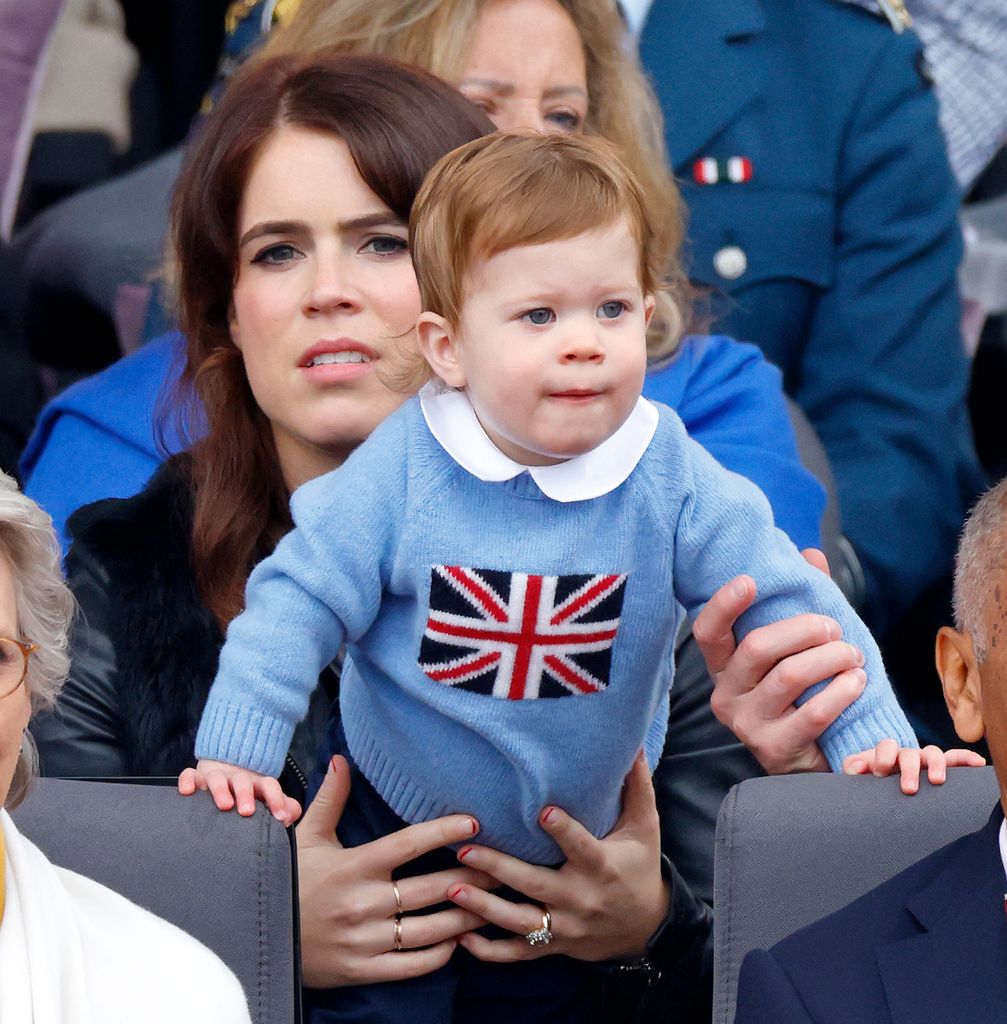
Princess Eugenie has welcomed her third child with husband Jack Brooksbank, but the arrival of another baby in the extended Royal Family has highlighted a curious difference between Eugenie and her older sister, Princess Beatrice.
Eugenie’s newborn daughter has no royal title.

Neither do her older brothers August, five, and Ernest, three.
Yet their cousins Sienna, four, and Athena, one — Beatrice’s daughters with Edoardo Mapelli Mozzi — may use aristocratic titles.
The reason does not come from King Charles or the British monarchy at all.
It comes from their father’s centuries-old Italian family.
Why Eugenie’s children are not princes or princesses

Princess Eugenie, 36, is a princess by birth, as is her sister Beatrice.
Their children, however, did not automatically inherit the same status.
Under the conventions governing British royal titles, Beatrice and Eugenie’s children are not entitled to be Prince or Princess because they are not grandchildren of the reigning monarch through the male line.
Beatrice and Eugenie themselves received their titles because their father, Andrew, was a son of Queen Elizabeth II.
That made the sisters male-line grandchildren of the monarch when they were born.
Their own children fall into a different category.
King Charles’ grandchildren are different
The contrast becomes clearer when looking at King Charles’ five grandchildren.
Prince William’s children — Prince George, Princess Charlotte and Prince Louis — all have royal titles.
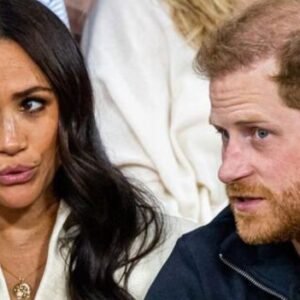
Prince Harry’s children, Prince Archie and Princess Lilibet, are also entitled to them.
Beatrice and Eugenie, however, are the King’s nieces rather than his sons.
Their children are therefore further removed from the monarch in the line through which princely titles traditionally pass.
Being in the line of succession does not automatically make someone a prince or princess.
Andrew losing his titles did not change his daughters’ status

The situation is made more complicated by what happened to Beatrice and Eugenie’s father.
Andrew was stripped of his “Prince” title last October amid continued scrutiny over his links to the late convicted sex offender Jeffrey Epstein.
That did not remove the titles Beatrice and Eugenie had held since birth.
The sisters remained princesses.
Their children’s positions were similarly unaffected because they had never held British princely titles in the first place.
But that is where Beatrice’s marriage introduces an unexpected twist.
Beatrice married into an Italian noble family
Beatrice married property developer Edoardo Mapelli Mozzi in July 2020.
Edoardo comes from a historic Italian noble family and is the son of Count Alessandro Mapelli Mozzi.
The Mapelli Mozzi family belonged to the Italian nobility before Italy became a republic in 1946.
Although noble titles are no longer legally recognized by the Italian state, they may continue to be used socially as courtesy titles.
According to Edoardo’s father, his son is a count.
And that means Beatrice acquired an entirely different title when she married him.
Princess Beatrice can also be called a countess
Long before Beatrice and Edoardo walked down the aisle, Count Alessandro explained what the marriage would mean under his family’s traditions.
“Edoardo is the only male descendant taking the family into the next generation, he is a count — his wife will be a countess automatically and any of their children will be counts or nobile donna,” he told the Mail on Sunday ahead of the 2020 wedding.
That means Beatrice can be described as a Countess — or “Contessa” — as well as a “Nobile Donna.”
Crucially, the same family tradition extends to their children.
Sienna and Athena can use titles their royal cousins cannot
Beatrice and Edoardo have two daughters together: Sienna Elizabeth Mapelli Mozzi and Athena Elizabeth Rose Mapelli Mozzi.
Neither is a British princess.
But through their father, Sienna and Athena may be styled “Nobile Donna” and referred to as countesses.
Edoardo’s son Christopher Woolf — known as Wolfie — from his previous relationship with architect Dara Huang is similarly entitled through his father’s family to be known as a count.
It creates an unusual situation.
Beatrice’s daughters cannot inherit their mother’s British princess title, yet they can potentially use aristocratic titles inherited from their father.
Eugenie’s marriage produced a different outcome
Princess Eugenie married Jack Brooksbank in 2018.
Jack was not granted a royal title upon marrying the Queen’s granddaughter.
That meant Eugenie’s children would take their rank through their father rather than acquiring a title from their mother.
August and Ernest are therefore known as Master Brooksbank.
The couple’s new daughter similarly does not become a princess simply because her mother is one.
That leaves Eugenie’s three children without the courtesy titles available to Beatrice’s children through Edoardo’s family.
The Italian titles come with an important distinction
Calling Sienna and Athena countesses does not mean Italy officially recognizes them as members of a legally privileged nobility.
Italy abolished legal recognition of noble titles after becoming a republic in 1946.
The Mapelli Mozzi titles survive as a matter of family tradition and courtesy.
They also have nothing to do with Buckingham Palace.
King Charles did not grant them.
Their mother being Princess Beatrice did not create them.
They exist entirely through Edoardo’s paternal family history.
The Mapelli Mozzi family traces its history back centuries
Count Alessandro has previously spoken proudly about the extraordinary length of his family’s documented history.
“We as a family celebrated 1,000 years in 1985 with unbroken documented archives,” he said.
“We are one of the only families in Italy to have all the records from that period to today.”
That heritage is what makes Beatrice’s children different from Eugenie’s when it comes to titles.
Both sets of children have a royal mother.
Both are descendants of Queen Elizabeth II.
Both belong to the King’s extended family.
But only one set also descends through a titled Italian paternal family.
Edward and Sophie made another choice entirely
Titles among Queen Elizabeth’s grandchildren and great-grandchildren have never followed one simple pattern.
Prince Edward and Sophie, Duchess of Edinburgh, chose not to have their children use Prince and Princess titles while growing up.
Lady Louise Windsor and James, Earl of Wessex, were instead raised with less prominent styles as their parents sought to give them a more conventional upbringing.
The result is a modern Royal Family in which close cousins can have dramatically different titles — or no titles at all.
Eugenie’s new arrival makes the contrast especially noticeable
The birth of Eugenie and Jack’s daughter has brought those differences back into focus.
Her mother is a princess.
Her aunt is a princess.
Her cousins are descendants of the same British royal line.
Yet the titles available to those cousins come from somewhere completely different.
Sienna and Athena’s potential status as countesses is not a special favor from the King or a sign that Beatrice’s family ranks above Eugenie’s.
It is simply the consequence of the man Beatrice married.
Two royal sisters, two families and two very different sets of traditions.
And in one of the stranger quirks of royal genealogy, Beatrice could not pass “Princess” to her daughters — but her husband could pass centuries of Italian nobility to them instead.