The 1% Club question that left viewers completely stumped
A question supposedly answered correctly by 10% of people has left viewers of ITV’s The 1% Club scratching their heads, with some admitting they were nowhere near the right answer.
The quiz show, hosted by Lee Mack, has a habit of making people question their own logic. From the comfort of the sofa, it can be easy to feel like you would breeze through the questions. Put yourself under the pressure of a TV studio, however, and things can look very different.
The premise of The 1% Club is simple. One hundred members of the public are challenged with questions designed to test their common sense, logic and intelligence.
As the rounds become harder, the percentage of the nation expected to answer each question correctly falls. Anyone who successfully answers a question that only one percent of the nation got right can take a share of up to £100,000 in prize money.
Questions from the programme regularly resurface on TikTok, where viewers try to solve them for themselves. One particular question has sparked plenty of debate.
Can you solve the 10% question?
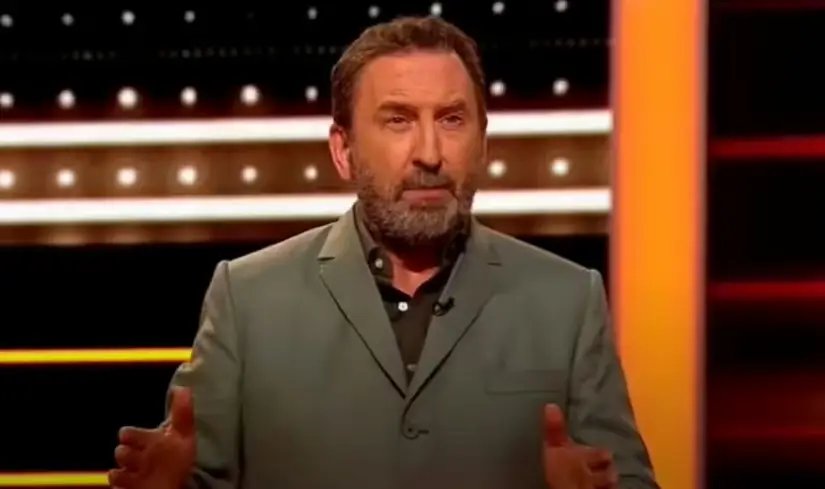
Lee Mack presented the question involving a car’s mileage:
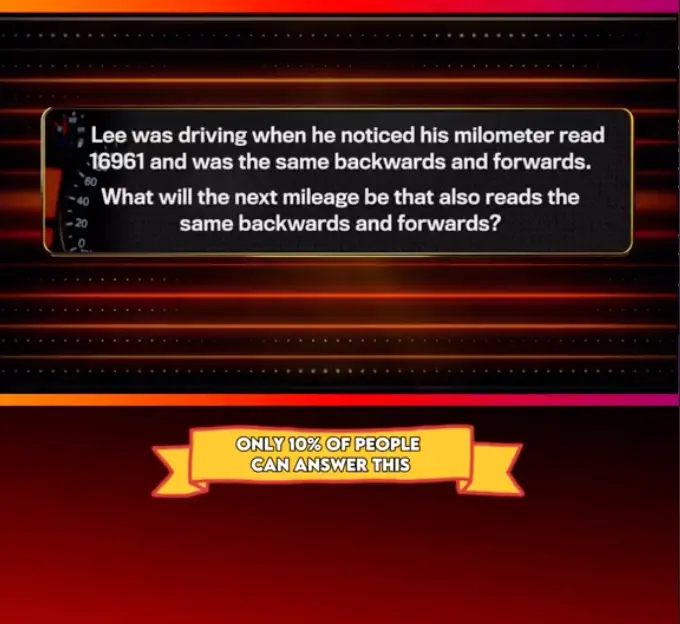
“Lee was driving when he noticed his milometer read 16961 and was the same backwards and forwards.
“What will the next mileage be that also reads the same backwards and forwards?”
It sounds straightforward once you know what you are looking for, but plenty of people struggled to work it out.
The answer is 17071.
The number is a palindrome, meaning it reads the same from left to right and right to left. After 16961, the next mileage with the same property is 17071.
What makes the question particularly interesting is that none of the contestants were eliminated at this stage, despite it being labelled as a 10% question.
Viewers on social media had a mixed reaction. Some were convinced they had worked it out, while others came up with completely different numbers.
One person admitted: “You lost me. I thought it was 17171.”
Another joked: “I got one correct. Do I get a prize?”
Others questioned whether the question was really difficult enough to be classed as a 10% question, with one viewer writing: “No way this was a 10% question,” followed by a laughing emoji.
Plenty of viewers still got it wrong
Despite the people calling the question easy, plenty of commenters failed to land on 17071.
Suggested answers included 17971, 19691 and 18881, showing just how quickly a seemingly simple number puzzle can become confusing.
One viewer summed up their reaction bluntly: “My dumb a** would’ve been out.”
That divide is part of what keeps The 1% Club so entertaining. Questions that seem obvious to one person can leave someone else completely stuck, particularly when there is a time limit and the pressure of competing on television.
And the mileage puzzle is far from the only question from the show to cause confusion.
The bat and ball question
Another famous example asks:
“A bat and a ball cost £1.10 in total. The bat costs £1 more than the ball. How much does the bat cost?”
The correct answer is £1.05.
At first glance, £1.10 for the two items might make £1 seem like the obvious answer for the bat. But if the bat costs exactly £1 more than the ball, the ball would cost 5p and the bat £1.05, bringing the total to £1.10.
It is exactly the sort of question that makes The 1% Club so effective at dividing viewers. Some people spot the trick almost immediately, while others can stare at it for far longer than they would like to admit.