“My Boy, My Boy”: Family of Murdered Student Henry Nowak Relives Fatal Night and Bodycam Trauma in New ITV Documentary

The family of murdered university freshman Henry Nowak has broken their silence in an emotionally devastating ITV documentary, Dear Henry: Our Fight for Justice, detailing the 1 a.m. police visit that shattered their lives and the subsequent trauma of watching body-worn camera footage that showed officers handcuffing the dying teenager instead of administering first aid.
Nowak, an 18-year-old student from Chafford Hundred, Essex, who made history in his household as the first member to attend university, was walking home from an evening out with his football club teammates in Southampton on December 3, 2025, when he was ambushed and stabbed five times.
The 1:00 A.M. Knock and a Father’s Scream
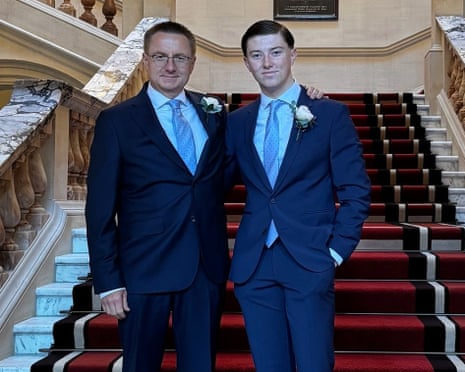
In the documentary, Henry’s mother, Lucy Ross, and his father, Mark Nowak, recount the moment Hampshire Police arrived at their respective front doors in the dead of night:
-
The Midnight Knock: Lucy Ross remembered her daughter Olivia alerting her to the late-night callers. Officers delivered the blunt news that Henry had been involved in an altercation and had died at the scene:“No words, no words can explain that feeling.”
-
The Aftermath at Home: Across town, Mark Nowak and Henry’s stepmother, Katie Woodcock, received the identical knock. Katie recalled Mark collapsing to his knees with a visceral scream: “My boy, my boy.”
-
A Double Trauma: Katie explained that their family’s heartbreak arrived in two crushing waves:“Our world has changed twice. The first time was the night that we were told that Henry had died. And the second time was when we watched that video.”
The Bodycam Scandal: Eight Minutes in Handcuffs
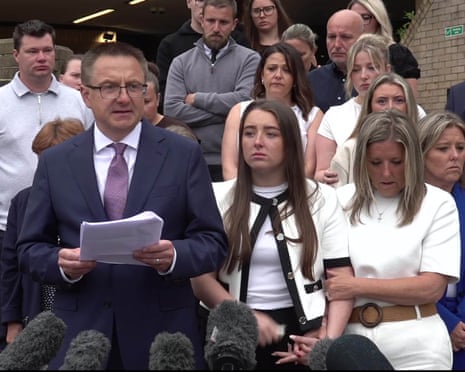
The eventual release of police body-worn video following the criminal trial ignited nationwide outrage over the responding officers’ handling of the incident:
-
Dismissed Pleas: As Henry lay bleeding heavily from an internal chest injury, he repeatedly informed the arriving constables that he had been stabbed and was unable to breathe. An officer dismissed his statements, replying: “I don’t think you have, mate.”
-
Restrained Instead of Treated: Officers cuffed Henry’s hands behind his back and formally placed him under arrest, leaving him on the pavement for eight minutes without emergency trauma care until he lost consciousness and succumbed to internal hemorrhaging.
-
IOPC Gross Misconduct Probe: The Independent Office for Police Conduct (IOPC) confirmed an ongoing gross misconduct investigation into two attending officers, examining whether their failure to recognize life-threatening wounds and their decision to restrain rather than treat Nowak constituted a fatal breach of duty.
-
Force Apology: Temporary Deputy Chief Constable Robert France issued an apology for the handcuffing and the tragic outcome, while maintaining that responding officers were actively misled by deceptive accounts given at the scene.
Calculated Deception: The Murder of Henry Nowak
During proceedings at Southampton Crown Court, prosecutors laid out the calculated actions taken by 23-year-old assailant Vickrum Digwa and his family:
-
The Weapon: Digwa attacked Nowak using an 8-inch blade, later claiming he carried it for religious purposes—a defense dismantled in court when evidence revealed he was already carrying a compliant ceremonial kirpan in addition to the lethal weapon.
-
Filming the Dying Student: Instead of calling for emergency services, Digwa used his mobile phone to record video of the teenager bleeding on the ground while actively denying to bystanders that any stabbing had occurred.
-
Destroying Evidence: Digwa’s mother, 53-year-old Kiran Kaur, rushed to the location to retrieve the murder weapon and hide it from investigators.
-
Fictitious Racial Assault: Digwa and his brother lied to emergency dispatchers and attending officers, falsely alleging that Digwa had been the victim of an unprovoked racially motivated assault and denying that any weapons were involved.
-
Sentencing:
-
Digwa was convicted of murder and possession of a bladed article, receiving a life sentence with a mandatory minimum term of 21 years.
-
Kaur was handed a three-year prison sentence for assisting an offender.
-
Impending Court of Appeal Showdown

The legal battle remains active on multiple fronts heading into the Court of Appeal on November 5:
-
Unduly Lenient Referral: The Solicitor General referred Digwa’s 21-year minimum tariff to the appellate court, arguing the sentence was unduly lenient given the severity of the crime and the callous aftermath.
-
Defense Appeals: Digwa is appealing both the length of his term and attempting to quash the murder conviction itself. His mother, Kiran Kaur, is concurrently appealing her three-year sentence amid public outcry over early-release provisions and potential deportation criteria for foreign nationals.
Rejecting Division and Honoring Henry’s Memory
Following the street violence and arrests that took place in Southampton in the aftermath of the verdict, Mark Nowak used the documentary to reaffirm that his son’s memory must not be weaponized by political or social factions:
“We want to use Henry’s heartbreaking story to make change for the better. We do not want his death to be used to create further division, hatred, or tension. We want his story to make our streets safer for everyone.”