The 1% Club viewers divided by deceptively worded questions that caught out contestants
The 1% Club has once again shown that even its supposedly easiest questions can cause plenty of confusion, with one 90% question leaving 12 contestants out of the game and viewers questioning the wording.
Hosted by Lee Mack on ITV, the quiz show puts 100 contestants through a series of questions that become progressively more difficult. Each question is assigned a percentage based on the proportion of the public expected to answer it correctly.
A 90% question, for example, is intended to be one that 90 percent of people could solve.
But one recent opening question proved that “easy” does not always mean straightforward.
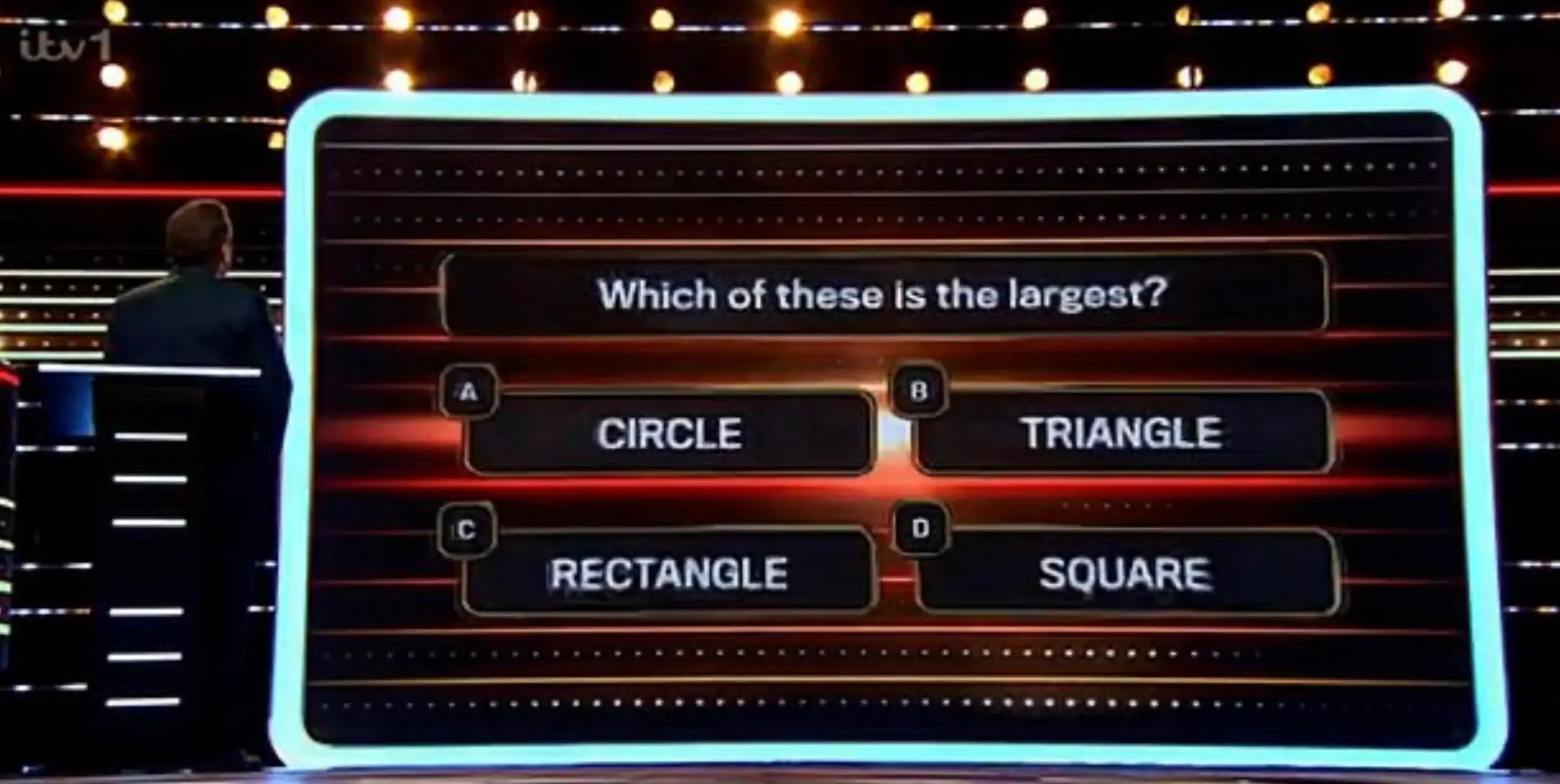
A 90% question catches out 12 contestants
Players were shown four options:
A) Circle
B) Triangle
C) Rectangle
D) Square
They were then asked: “Which of these is the largest?”
The intended answer was C) Rectangle — not because of the shape itself, but because “rectangle” is the longest word of the four.
Despite being rated as a 90% question, the puzzle eliminated 12 contestants at the very first hurdle.
The unusual wording quickly caught the attention of viewers, with some arguing that the question was effectively asking which word was longest rather than which shape was largest.

One frustrated viewer described it as a “stupidly worded question”, while others called it “poorly worded”, “nonsensical” and surprisingly difficult for an opening question.
Another viewer admitted they had answered correctly but still questioned the way it had been phrased.
The debate also highlighted how The 1% Club can punish contestants who interpret a question too literally. The show is built around logic and lateral thinking rather than conventional general knowledge, meaning the wording itself can sometimes be the key to solving a puzzle.
The show’s questions can be deceptively simple
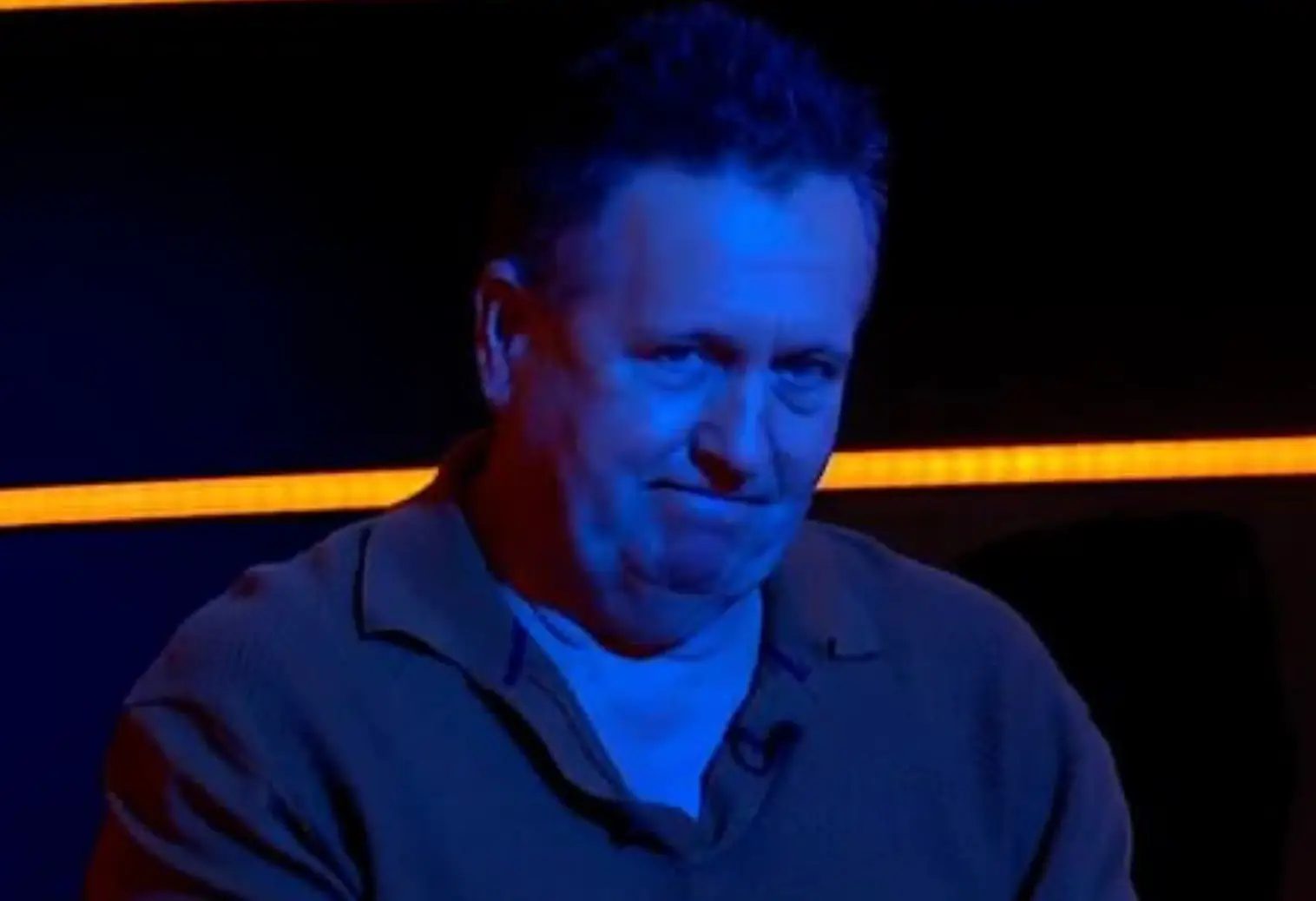
The incident is a reminder of what makes The 1% Club different from more traditional quiz shows.
Rather than testing contestants on obscure facts, many of its questions require them to look at familiar information from an unexpected angle. A question that appears obvious can therefore become much harder once the clock starts.
That was reflected in the reaction from viewers, with one admitting that watching the programme from home had made them realise how quickly they could be caught out themselves.
The episode did not remain controversial for long, however. Four contestants eventually made it through to the final 1% question, where two successfully solved a code and won £46,500 each.
Another puzzle sparks a different argument
It was not the first time a question on the show had caused debate over the intended answer.
In another episode, contestants were shown the sequence:
PHEASANTORTOISEALION
They were asked: “Without reordering any letters, how many animals appear in the sequence below?”
The official answer was six.
The words identified were pheasant, tortoise, sealion, lion, seal and ant.
However, the inclusion of “ant” prompted a fresh argument among viewers. Some questioned whether an insect should count as an animal, while others pointed out that insects are animals in the biological sense.
The wording also led some viewers to question exactly how the hidden words were supposed to be identified without reordering the letters, adding another layer of debate around an already tricky puzzle.
When the wording becomes part of the puzzle
Both questions demonstrate why The 1% Club can be so frustrating for contestants and viewers alike.
In the rectangle puzzle, the answer depended on moving away from the literal meaning of “largest” and considering the words themselves. In the animal sequence, the controversy centred on what the word “animal” included and how the hidden words could be read from the sequence.
The questions may look simple on the screen, but with only a limited amount of time to respond, a single word can completely change how a contestant approaches the problem.
And that is precisely what makes The 1% Club so difficult: sometimes the hardest part is not finding the answer, but figuring out exactly what the question is asking.