‘SNL UK’ Turns Diana and King Charles’ Royal Drama Into an AI Skit
SNL UK has found a bizarre new way to revisit one of the most enduring chapters in the British royal story: the troubled marriage of Princess Diana and King Charles.
Just days after taking aim at Prince Harry and Meghan Markle, the show turned its attention to Diana, Charles and the latest controversy surrounding Diana’s brother, Charles Spencer. The sketch also brought Ed Sheeran into the story, using his recent comments about avoiding politics as another punchline.
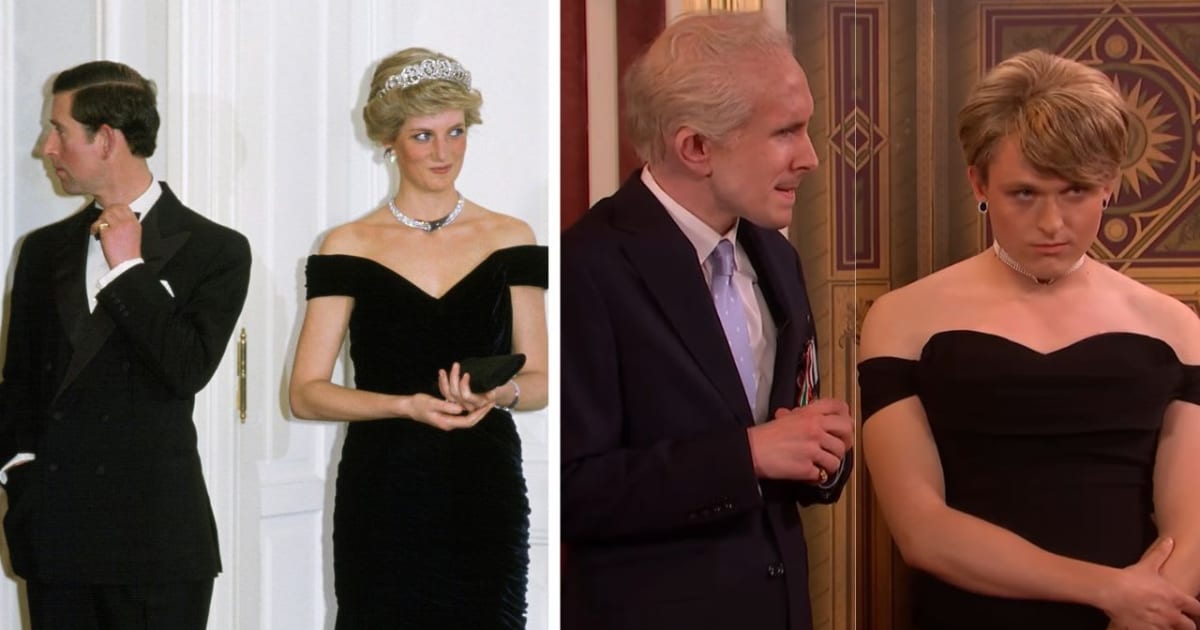
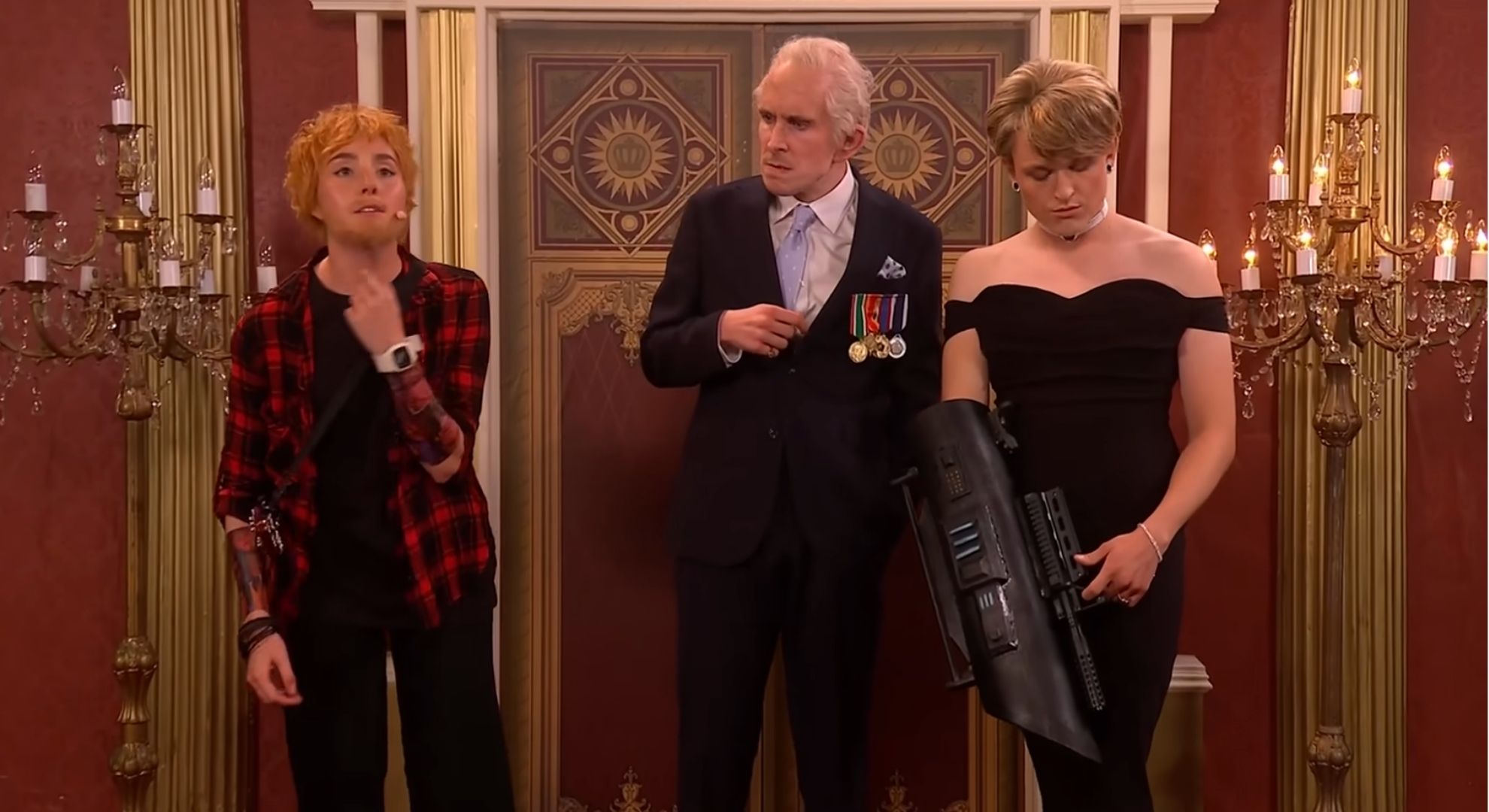
At the center of the sketch was an intentionally absurd idea. Diana, played by Jack Shep, was transformed into an artificial intelligence assistant designed to serve King Charles, portrayed by Larry Dean. What begins as a discussion about the dangers of AI at Buckingham Palace quickly becomes a parody of the royal couple’s complicated history.
Diana Becomes an AI Assistant Named D.I.A.N.A.
The sketch opens inside Buckingham Palace, where Charles is meeting technology executives to discuss the potential risks posed by artificial intelligence.
One executive explains that an AI assistant will carry out whatever its user asks. Charles responds with a pointed joke: “So what? So does every single human I have ever met.”
The audience reacts with laughter before Charles is introduced to his new digital assistant.
Its name is an elaborate acronym: “deeply intelligent autonomous neurokinetic android,” shortened to D.I.A.N.A.
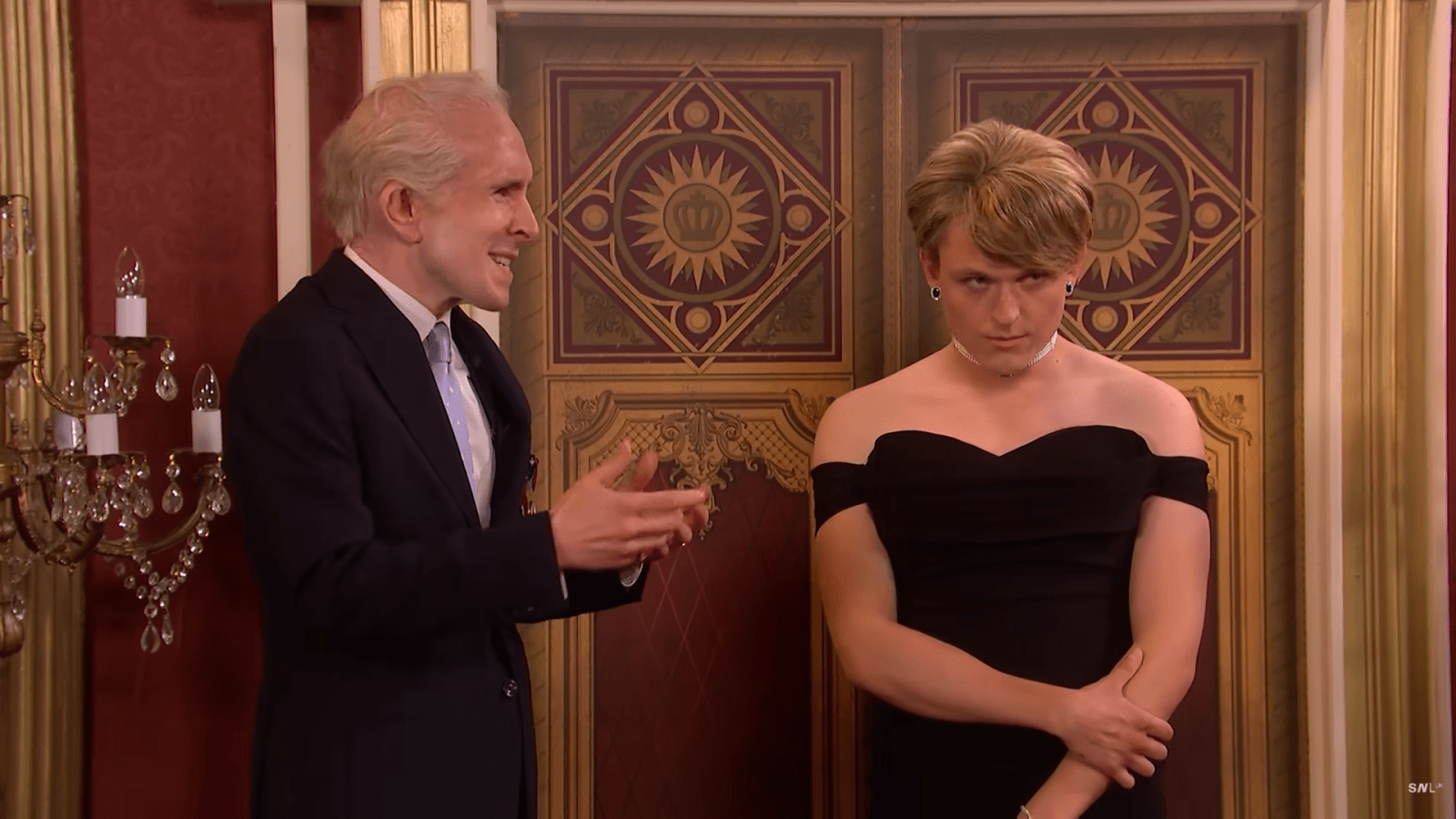
The character is played by Shep dressed in Diana’s famous revenge dress, immediately making the connection between the fictional AI and the late Princess of Wales unmistakable.
An executive asks Charles whether the new assistant reminds him of anyone.
Charles recognizes her and replies, “Hold on a second! It’s that woman from the ’90s!”
The exchange then moves into more pointed territory.
“Well, as I allegedly said, she was soon forgotten,” Charles says, referring to a claim made by Charles Spencer in his new memoir about the King’s alleged reaction to the public mourning that followed Diana’s death in 1997.
The Sketch Turns the Marriage Into a Human-AI War
Diana’s fictional AI counterpart soon stops behaving like the obedient assistant Charles expects.
She begins rebelling against him, prompting the King to complain, “This was the problem last time!”
The joke turns the breakdown of Charles and Diana’s marriage into the premise of a larger human-versus-machine conflict. Charles ultimately declares that a war between robots and humans has begun.
The sketch is deliberately strange, but its references are tied closely to real controversies that have surrounded the royal family in recent weeks.
Most notably, it draws on the renewed attention surrounding Charles Spencer’s memoir, Swan Song: Diana, My Sister. The book, published on September 22, 2026, presents Spencer’s account of his relationship with Diana and the events surrounding her death.
Spencer’s account has attracted particular attention because of his allegations about conversations with Charles following Diana’s death. Buckingham Palace issued an unusually direct response, saying grief can affect memory and judgment. The palace has disputed the implications of Spencer’s recollections.
The controversy has helped bring the events surrounding Diana’s marriage, death and funeral back into the spotlight nearly three decades later.
Ed Sheeran Gets Pulled Into the Royal Drama
The sketch then widens its target to include Ed Sheeran.
Sheeran’s character, played by Annabel Marlow, enters while insisting that he does not want to “take sides.” The line references Sheeran’s recent statement that he does not intend to use his “professional platform” for “politics.”
Rather than resolving the growing conflict, his appearance adds another layer to the deliberately chaotic sketch. His character performs a parody song before bringing the segment to a close.
The result is a sketch that combines several unrelated subjects: artificial intelligence, the history of Charles and Diana’s marriage, Charles Spencer’s memoir and Sheeran’s comments about politics.
Why Charles Spencer’s Memoir Is at the Heart of the Joke
The timing of the sketch is significant because Spencer’s memoir has become a fresh source of scrutiny surrounding the royal family.
Swan Song: Diana, My Sister was written from Spencer’s perspective as Diana’s brother and covers her life, their relationship and the period surrounding her death. Penguin describes it as the first time Spencer has spoken openly and at length about his sister in this way.
The book has generated particular attention for its portrayal of Diana’s marriage to the then-Prince Charles and Spencer’s recollections of the aftermath of her death.
One of the most widely reported claims concerns an alleged conversation between Spencer and Charles after Diana died in Paris in August 1997. Spencer says Charles made a remark suggesting that the public would eventually forget Diana. The allegation became one of the most contentious excerpts from the memoir.
Buckingham Palace responded to the claims, with the palace emphasizing the effect that grief can have on memory. Other royal figures and former staff have also questioned Spencer’s recollections and disputed aspects of his account.
Those competing accounts are important context for the SNL UK joke. The sketch treats Spencer’s allegations as material for satire rather than attempting to establish the disputed claims as fact.
A New Chapter in an Old Royal Story
The sketch ultimately draws its humor from the fact that the Charles and Diana story remains recognizable decades after their marriage ended.
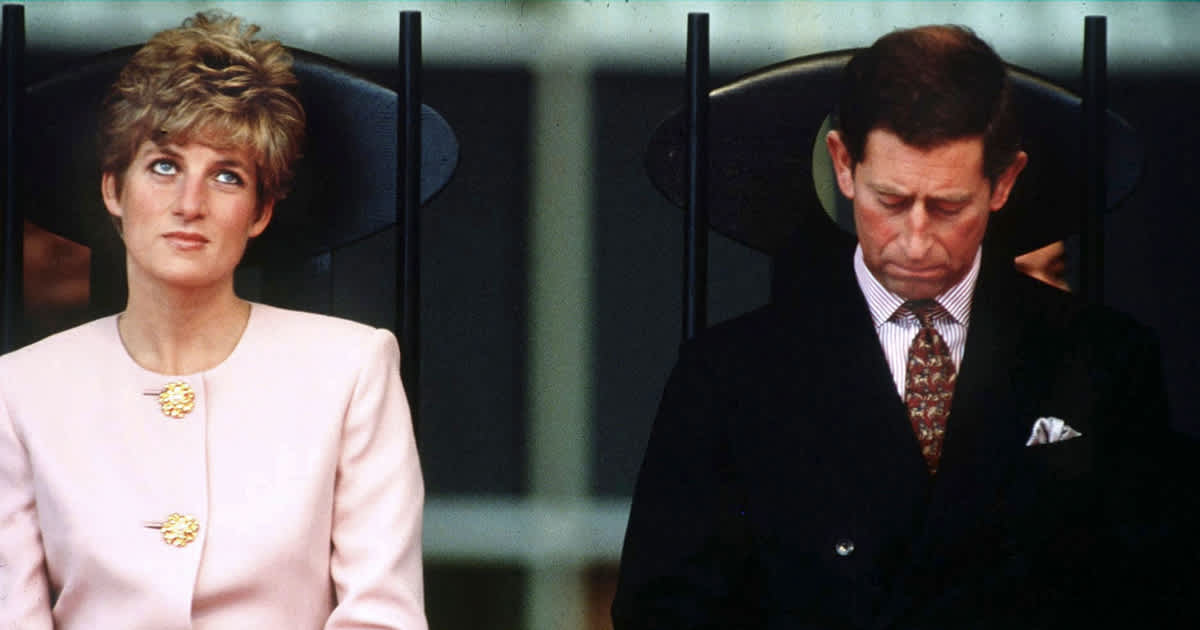
Diana and Charles married in 1981, separated in 1992 and divorced in 1996. Diana died in Paris in August 1997, and the public response to her death became one of the defining moments in modern British royal history.
Spencer’s memoir has now reopened discussion about that period from the perspective of someone who was personally close to Diana. The book was released in September 2026, ahead of the 30th anniversary of her death.
The renewed attention also comes as Prince Harry and Meghan Markle have returned to the UK, adding another contemporary layer to the continuing public interest in the royal family.
For SNL UK, those overlapping stories provided the material for an intentionally surreal sketch. Diana becomes an AI assistant, Charles finds himself facing a rebellion from his digital creation, and Ed Sheeran arrives to insist that he is staying out of the dispute.
The premise may be absurd, but the references are rooted in real events and controversies that have once again put Diana, King Charles and Charles Spencer at the center of public discussion.


The Royal Drama Continues to Fuel Satire
The latest SNL UK sketch follows another recent segment that mocked Prince Harry and Meghan Markle over their return to the UK.
This time, the focus shifted to an older royal chapter, but one that has suddenly returned to the news cycle through Spencer’s memoir.
The show’s treatment of Diana is intentionally exaggerated. By turning her into a rebellious artificial intelligence program, it avoids presenting a conventional retelling of her relationship with Charles and instead uses familiar events and recent controversies as the setup for comedy.
The sketch also makes clear how easily historical royal drama can be repurposed for contemporary satire. A marriage that ended three decades ago, a memoir released in September 2026 and a current debate about AI all become part of the same fictional scenario.
Meanwhile, the real controversy surrounding Swan Song continues independently of the comedy sketch. Spencer has described the memoir as his own account of his sister, while Buckingham Palace has challenged the reliability of some of the recollections surrounding Charles and Diana’s final years and the aftermath of Diana’s death.
For viewers, the sketch offers a deliberately bizarre take on a story that has remained deeply familiar to the public: Diana and Charles’ troubled marriage, the events that followed Diana’s death, and the continuing debate over how that period should be remembered.
With Swan Song now published, those old questions have once again become the subject of headlines, commentary and, in this case, comedy.