‘A Small Light’: The Remarkable Woman Who Risked Everything to Save Anne Frank’s Family From the Nazis
Anne Frank’s diary became one of the most haunting accounts of the Holocaust. But behind the words that would eventually reach millions of readers was a woman whose courage helped ensure they survived. Her name was Miep Gies, and National Geographic’s A Small Light finally puts her extraordinary story at the center of the screen.
This eight-part historical drama does more than revisit one of World War II’s most familiar stories. It exposes the choices ordinary people faced as Nazi persecution tightened its grip on the Netherlands — and the devastating consequences of deciding whether to stand up or look away.
At its heart is a question that remains deeply uncomfortable: How much would you risk to do what is right when your own life is on the line?
Rather than telling the Holocaust solely through the eyes of its victims, A Small Light explores the people who witnessed the atrocities unfolding around them and chose to resist. Their courage was rarely loud or celebrated. Sometimes, it meant hiding a family, joining an underground network or simply refusing to cooperate with a regime built on hatred.
And that is precisely what makes this story so powerful.
The Woman Behind Anne Frank’s Most Important Legacy
Few World War II stories have reached as many people as that of the Frank family. Anne Frank’s diary offered the world an intimate glimpse into the life of a young girl forced to grow up under a regime determined to destroy her and millions of others.
Yet A Small Light deliberately shifts attention away from the family whose story is already widely known.
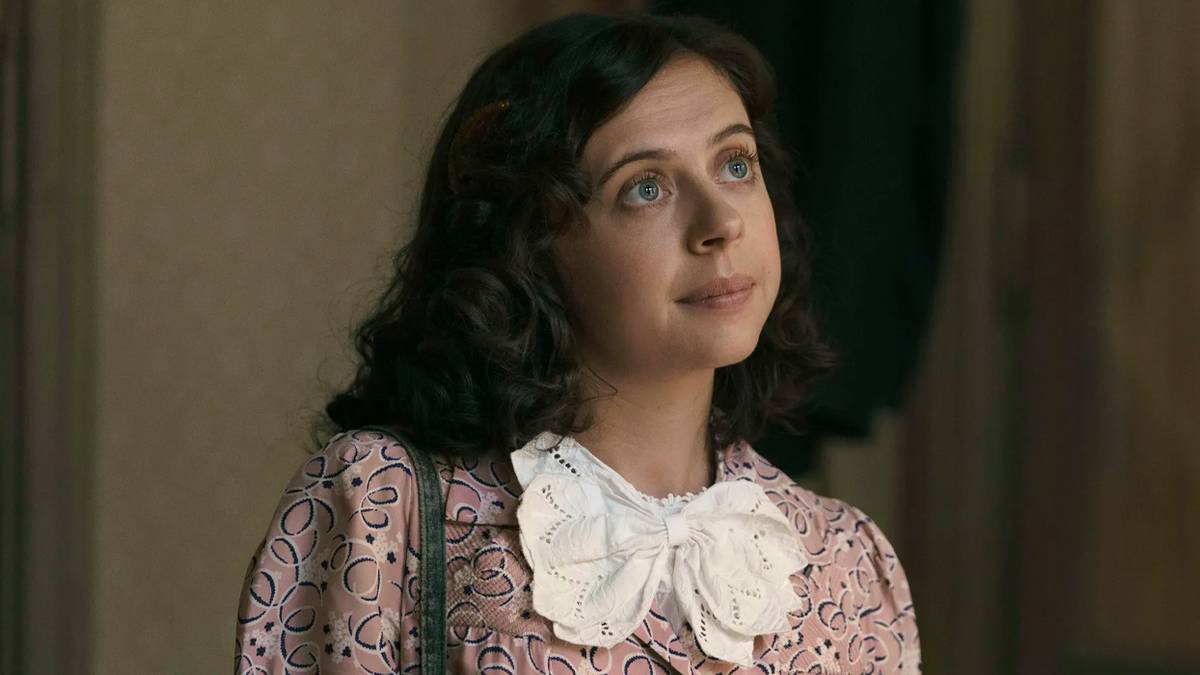
Instead, it follows Miep Gies, played by Bel Powley, and her husband Jan Gies, portrayed by Joe Cole. Together, they helped shelter the Frank family, other Jewish families and anti-Nazi activists while the occupation made even the smallest acts of defiance increasingly dangerous.
Miep’s contribution went beyond helping people survive. She was instrumental in preserving Anne’s diary after the family’s hiding place was discovered. Without her intervention, one of the most important personal accounts of the Holocaust might never have reached the world.
The series also gives space to the wider network of ordinary Dutch citizens who refused to accept the persecution surrounding them. They were not necessarily trained resistance fighters or people destined for historical recognition. They were individuals who made a choice when staying out of trouble would have been considerably easier.
That choice forms the emotional backbone of the drama.
It also gives the series an uncomfortable modern relevance. The propaganda, prejudice and divisive rhetoric that helped fuel the Holocaust did not emerge overnight. A Small Light reminds viewers how hatred can gradually become normalized while those who are not directly affected continue enjoying their everyday lives.
Bel Powley’s Miep Gies Is Far More Than a Conventional War Hero
When viewers first meet Miep, she is not presented as someone preparing to become a historical hero.
She is a young woman trying to escape her adopted family’s attempts to arrange a marriage between her and her adopted brother. She also needs a job and wants to establish an independent life for herself.
Her search for employment brings her to Otto Frank, played by Liev Schreiber, a German businessman who has relocated to the Netherlands in an effort to protect his family from persecution.
Otto initially hesitates to hire Miep because she lacks experience. But her determination, personality and strong moral instincts eventually convince him to give her a chance.
That professional relationship gradually develops into something much more consequential.
As the Nazi threat intensifies, Otto makes an extraordinary request: he needs Miep to help hide his family. Accepting means putting herself and those closest to her in serious danger.
Powley delivers a compelling performance, capturing both Miep’s youthful uncertainty and the determination that emerges as the circumstances around her become increasingly desperate.
The storytelling also takes a non-linear approach, occasionally filtering events through unreliable narrators. Anne Frank, played by Billie Boullet, adds another interesting dimension. Her persistent optimism sometimes shapes how viewers interpret the increasingly frightening reality surrounding the characters.
The result is a portrait of courage that develops through difficult decisions rather than appearing fully formed from the beginning.
Miep and Jan Gies: When Love Becomes an Act of Resistance
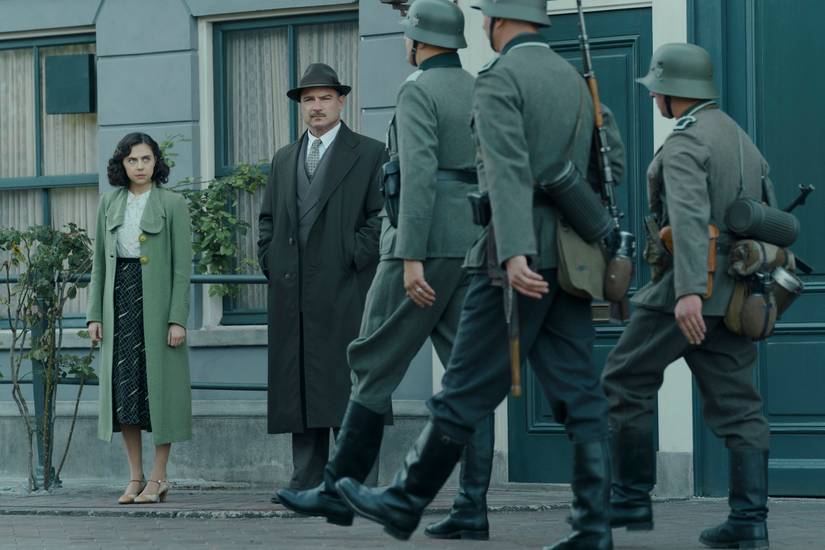
One of the series’ strongest elements is its portrayal of Miep and Jan’s relationship.
Played by Joe Cole, Jan initially enters Miep’s life through a marriage of convenience. But what develops is a passionate partnership between two people increasingly unwilling to stand aside while others suffer.
Their approaches to resistance, however, are not identical.
Miep focuses on protecting the Frank family and other people forced into hiding. Jan becomes increasingly involved with the Dutch Resistance, often keeping the full extent of his activities from Miep to spare her additional worry.
His involvement takes longer to emerge, but his actions are no less significant.
The contrast between them gives the series an important layer of complexity. Resistance did not have one recognizable face. Some people risked everything by sheltering families inside their homes. Others worked through underground networks to challenge the Nazi occupation.
Miep and Jan represent both sides of that struggle.
Their relationship also illustrates how impossible it became to separate private life from the dangers of the war. Every decision carried consequences, and neither could simply return to the ordinary existence they once knew.
Tess Reveals the Dangerous Comfort of Looking Away
Not every character in A Small Light chooses to resist.
One of the most revealing figures is Tess, played by Eleanor Tomlinson, Miep’s friend. She is not depicted as an inherently cruel person. Instead, she represents something arguably more unsettling: someone who becomes so preoccupied with personal comfort, appearances and survival that acknowledging the suffering around her becomes increasingly inconvenient.
Her willingness to associate with people connected to the Nazi Party is driven by a desire to maintain her position in society and protect herself.
But that is exactly where the contrast with Miep becomes impossible to ignore.
Both women live in the same increasingly dangerous environment. Both have reasons to worry about their own futures. Yet Miep searches for ways to help those being persecuted, while Tess repeatedly finds justifications for avoiding the uncomfortable reality.
Through Tess, the drama examines how indifference can gradually erode a person’s moral judgment.
She is sometimes frustrating to watch, but that is part of what makes her character effective. Her behavior forces viewers to confront a difficult possibility: people do not always support injustice because they actively believe in it. Sometimes, they simply decide that challenging it would cost too much.
The Historical Figures Who Deserved More Recognition
Despite its powerful central story, A Small Light does make certain compromises with historical accuracy.
Several members of Otto Frank’s Opekta business staff are fictionalized, while the series gives relatively little attention to another important woman in the real-life story: Bep Voskuijl.
Bep was a close friend of Anne Frank and played a significant role in helping the family remain hidden. Her contributions were comparable in spirit to Miep’s, yet the series appears to incorporate aspects of her role into Miep’s storyline rather than giving her an equally developed presence.
That decision may help simplify the narrative, but it also risks overlooking another woman who put herself in danger to protect others.
Miep herself offered a particularly moving tribute after Bep’s death:
“The special thing about Bep was that she was so humble. She was heroic without bravura, simply assumed that the hiders in the Annex must be helped. For her, that wasn’t a difficult choice to make.”
Those words capture the quiet heroism that defines the series. Bep did not need applause or recognition to understand her responsibility. Still, her contribution deserved to be remembered in its own right.
Haunting Cinematography Makes the Final Episodes Hit Harder
The performances and writing are only part of what makes A Small Light so affecting.
Cinematographer Stuart Howell, working alongside the production design team, creates an increasingly unsettling visual atmosphere as the story approaches its devastating conclusion.
The later episodes are particularly striking. As the war nears its end and the fate of the Frank family becomes clearer, the imagery takes on a sense of emptiness and isolation.
The absence becomes almost tangible. It evokes the lives interrupted, the futures destroyed and the hope that disappeared alongside so many innocent people.
Rather than relying on constant visual spectacle, Howell uses restrained cinematography to give these moments their emotional force.
The costume design by Matthew Simonelli also helps establish the historical setting. The clothing feels understated and lived-in, allowing the characters to inhabit their world without appearing overly polished or theatrical.
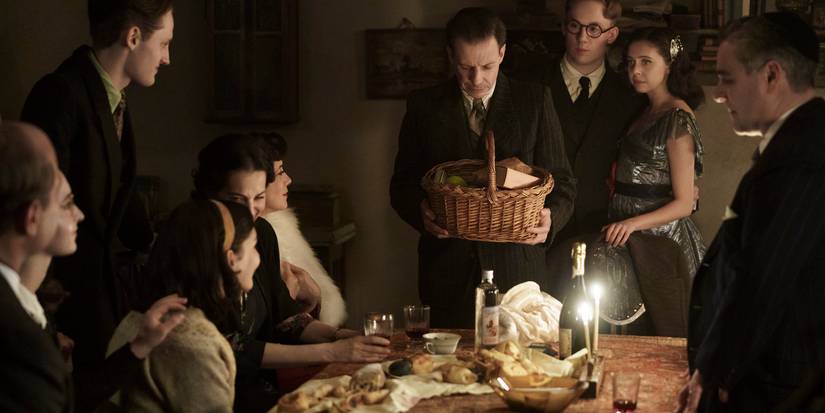
Perhaps most disturbing are the visual contrasts between those who continue dancing, celebrating and enjoying extravagant lifestyles and the Jewish families struggling to survive under Nazi persecution.
While some people are fighting for their lives, others carry on as though nothing has changed.
That contrast is among the drama’s most troubling observations.
Why Eight Episodes Work Better Than a Two-Hour Film
A Small Light is not always fast-paced. Some sections take their time, and viewers looking for constant action may find the storytelling slow.
But the deliberate approach serves an important purpose.
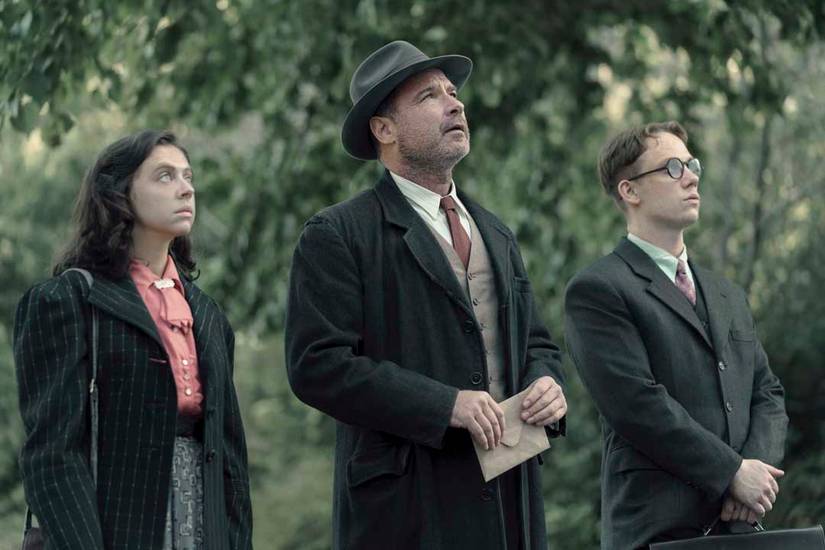
The Nazi occupation did not transform everyday life through one sudden dramatic event. Persecution intensified over time. Hatred became increasingly visible, restrictions tightened, and people who were not directly targeted often continued their routines with disturbing normality.
Miep’s courage developed in much the same way.
Helping the Frank family was not simply one spontaneous act of heroism. It involved a succession of deliberate decisions, each carrying its own risks. Jan’s involvement and the work of the Dutch Resistance followed a similar pattern.
An eight-part miniseries gives these developments room to breathe.
A feature film might have struggled to capture the evolution of Miep and Jan’s relationship, the gradual escalation of danger and the different ways ordinary people responded to the occupation.
Although the slower pacing may make it harder to keep viewers coming back week after week, the series has considerable potential as a binge-worthy drama. Each episode adds another layer of tension, allowing the emotional consequences of the characters’ decisions to accumulate.
Final Verdict: A Powerful Tribute to Those Who Refused to Look Away
A Small Light is ultimately a moving tribute to the ordinary people who chose to help when the world around them became increasingly cruel.
Across eight episodes, the drama balances love, humor and everyday relationships against the constant threat of persecution. Even during quieter moments, the audience is never allowed to forget the danger waiting just beyond the characters’ immediate surroundings.
The series does not rely on gratuitously graphic depictions of the Holocaust to make its point. Its restrained storytelling often makes the tragedy more devastating. Terrible things can happen while everyday life continues, and those who remain untouched may not recognize the significance of their choices until it is too late.
There are familiar conventions of historical biographical dramas here, and the limited treatment of Bep Voskuijl is a genuine disappointment. But these shortcomings do not diminish the importance of the central story.
History is not simply something that happens to people in another place or another time. It is also shaped by the decisions individuals make while events are unfolding around them.
Miep Gies and those who stood beside her could not bring down an entire system of hatred. But they could protect the people directly threatened by it — and that mattered.
Sometimes, heroism is not about changing the world. It begins with refusing to look away.
Rating: B+
Release Information: A Small Light premiered on National Geographic on May 1, 2023. The series is also available to stream on Disney+ and Hulu, with new episodes airing Mondays on National Geographic and streaming on both platforms.